Twenty-One Miles, Seven Signatures
The Strait of Hormuz didn't close because of missiles. It closed because of paperwork. And the market is pricing the missiles, not the paperwork.
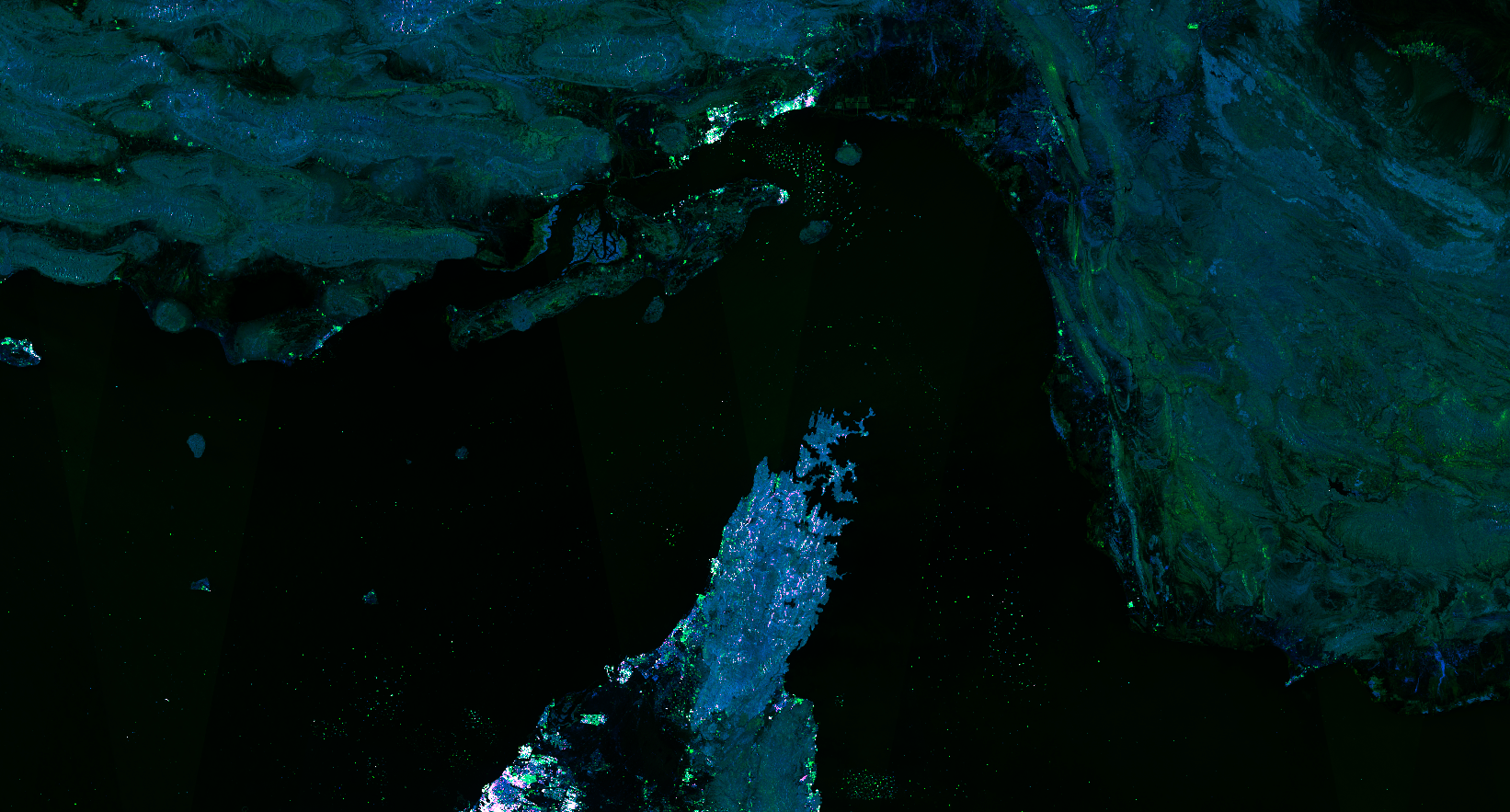
On the morning of March 6, a bulk carrier transiting the Strait of Hormuz broadcast "CHINA OWNER" on its AIS transponder, hoping three syllables would do what the US Fifth Fleet could not: guarantee safe passage. An LPG tanker behind it identified itself as Muslim-owned and Turkish-operated. They were the only commercial vessels in the waterway. The JMIC had just confirmed zero oil tanker transits in the preceding 24 hours. In January, the Strait had averaged 10.3 million deadweight tons per day.
Between March 1 and March 2, seven of the twelve clubs in the International Group of Protection and Indemnity Clubs had issued 72-hour cancellation notices on war risk coverage for the entire Persian Gulf corridor. Gard. Skuld. NorthStandard. The London P&I Club. The American Club. Steamship Mutual. By the time those notices took effect at midnight GMT on March 5, the world's most important energy chokepoint was shut. The IRGC commander who declared it "closed" and threatened to burn any ship that entered was performing for cameras. The seven clubs that filed paperwork had already done the job.
This matters because the market is treating the Strait closure as a military event with a military resolution. It is not. It is an insurance event with an insurance resolution, and insurance resolves on a fundamentally different timeline than warfare. That is the thesis. Everything that follows builds on it.
TL;DR:
- The Strait of Hormuz was effectively closed not by Iranian missiles but by seven P&I insurance clubs withdrawing war risk coverage, making commercial transit legally impossible. The Brent curve is pricing a 2-3 week disruption.
- I think it lasts 5-7 weeks, because even after a ceasefire, insurance reinstatement requires a sequential, multi-party chain (risk reassessment → treaty reinsurance → club buy-back → shipowner acceptance) that has no historical precedent for speed. The Red Sea analog took two years to partially normalize, and that never involved full P&I withdrawal.
- Iran's unresolved succession crisis means there is currently no credible counterpart to negotiate a ceasefire with. Mines, if deployed, make the insurance problem permanent.
- The market has largely priced the oil disruption but is underpricing duration, barely pricing the fertilizer-to-food transmission (33% of global fertilizer transits Hormuz, no strategic reserves exist, spring planting is happening now), and not pricing the semiconductor vulnerability (Qatar supplies 30% of Taiwan's LNG; TSMC runs on that grid). The further from crude along the transmission chain, the wider the mispricing.
Brent closed Friday at $92.69, up 28% in a week. The front-month curve tells the market's story: May at $92.69, June at $87.20, July at $82.88. That steep backwardation implies a two-to-three-week disruption followed by meaningful flow recovery. I think the curve is underpricing duration by a factor of roughly two, and I want to explain exactly why, where the reasoning is strong, and where it could be wrong.
P&I insurance is the legal mechanism by which a vessel is permitted to enter any major port on earth. Not a preference. Not a cost. A legal gate. Without a valid P&I certificate from an IG club member, a tanker cannot discharge cargo at Rotterdam, Singapore, or Fujairah. It cannot satisfy the loan covenants on its mortgage. It cannot sail. The IG clubs insure roughly 90% of global ocean-going tonnage. When seven of twelve withdrew coverage, they did not raise the price of transiting Hormuz. They made transit legally impossible for most of the world's commercial fleet.
Reopening requires a specific chain of events that no political actor controls end to end. First, military de-escalation. Then a ceasefire credible enough to change the assessed security environment. Then insurer risk reassessment. Then reinsurance capacity reinstated at the treaty level, which means multi-party negotiation between treaty reinsurers and P&I clubs, governed by Solvency II capital requirements for European reinsurers. Then clubs offer buy-back terms. Then individual shipowners accept at whatever premium clears. Each link involves a different institution with a different incentive structure. A ceasefire announcement does not collapse this chain. It starts it. The question is how long the chain takes to run, and the honest answer, based on available precedent, is weeks at best.
The Red Sea is the closest analog. Houthi attacks began in November 2023. Premiums surged twentyfold by January 2024. Two full years later, before Hormuz, those premiums remained substantially elevated despite reduced attack frequency. The insurance market never normalized. And this is the part that matters most: the Red Sea never triggered full P&I withdrawal. Only premium escalation. What happened at Hormuz is structurally different. Capacity was not repriced. It was removed. Reinstatement after removal is harder than adjustment after repricing, because it requires rebuilding treaty-level coverage through negotiation rather than adjusting rates within existing frameworks.
I should be honest about where this analog is imperfect. The Red Sea carries roughly 12% of seaborne oil. Hormuz carries 20%, plus a fifth of global LNG. The economic and political pressure to restore Hormuz is categorically larger. Some clubs may move faster than precedent suggests. But "faster than Red Sea" and "as fast as the Brent curve implies" are very different claims, and the curve is pricing the latter.
Washington's DFC order on March 3 illustrates the gap between political intent and operational reality. The DFC covers expropriation and currency inconvertibility, not hull damage. Port authorities do not accept government guarantees in lieu of IG certificates. Tanker mortgage covenants require IG-equivalent P&I. The DFC's statutory cap of $205 billion falls short of JPMorgan's estimate of $352 billion needed for all Gulf vessels. On the same day, the US Navy privately confirmed: no availability for escorts, no timeline. Trump's $20 billion insurance backstop on Friday did nothing to calm crude. The market, whatever it may not understand about reinsurance plumbing, understood this: political announcements and operational mechanics are different things.
So that is the structural argument. The actuarial clock runs slower than the military clock. Now let me explain why the current political situation makes the gap between them wider, not narrower.
For the insurance chain to start, two things must happen at once. The military situation must de-escalate, and a diplomatic resolution must be credible enough for insurers to reassess. As of March 8, the military track is advancing and the diplomatic track is stalling.
The US-Israeli campaign has substantially degraded Iran's conventional capability. Over 300 ballistic missile launchers destroyed per the IDF. Iran reportedly down to roughly a thousand ballistic missiles. Phase two is underway: targeting defense-industrial assets and missile production facilities. Militarily, Iran's ability to sustain the Strait disruption is weakening by the day.
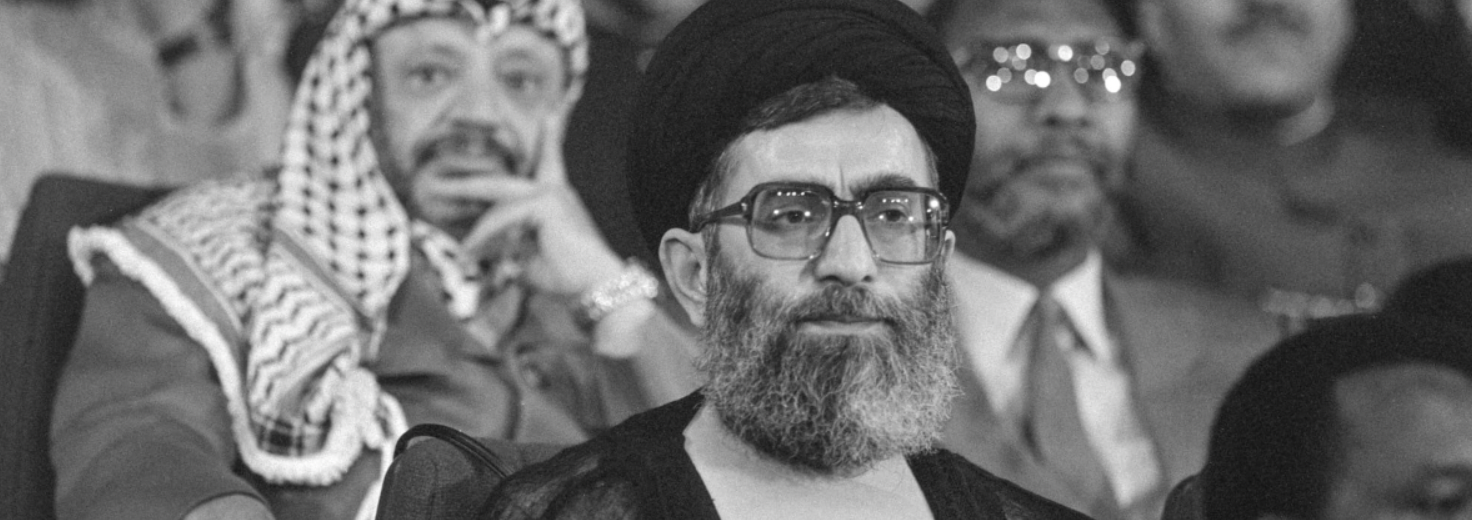
But military degradation without a diplomatic counterpart produces attrition, not resolution. And right now, there is no counterpart. Iran's succession crisis is unresolved. The Assembly of Experts announced today that consensus has been reached, with Mojtaba Khamenei, the late leader's son, as the apparent choice. But the Assembly cannot convene in person because Israeli strikes hit its offices in Qom on March 3, and several members insist a formal vote requires physical assembly. On Polymarket, no candidate tops 18% and "Position abolished" trades close behind. Until a new Supreme Leader is formally installed, nobody on the Iranian side has clear authority to commit to a ceasefire that either the adversary or the insurance market would find binding.
The identity of the successor shapes the duration thesis directly. Mojtaba signals IRGC consolidation, hardline continuity, and a leader whose authority over factional commanders has never been tested under fire. Georgetown's Kamrava described it as the deep state choosing survival over experimentation. A more moderate figure might signal openness to negotiate sooner. The most likely successor appears to be the one least likely to offer a rapid off-ramp.
Washington's own posture adds fog rather than clarity. Hegseth and Rubio are, per Middle East Eye, "at each other's throats" over deploying special forces at Israel's request. Hegseth has signaled a war duration of
four to eight weeks.Trump refuses to rule out ground troops. The CIA has reportedly begun training Kurdish opposition, which implies a planning horizon measured in months. None of this assembles into a picture where a clean ceasefire is days away. And even if one materializes, it still has to traverse the full insurance reinstatement chain before a single barrel moves commercially through the Strait.
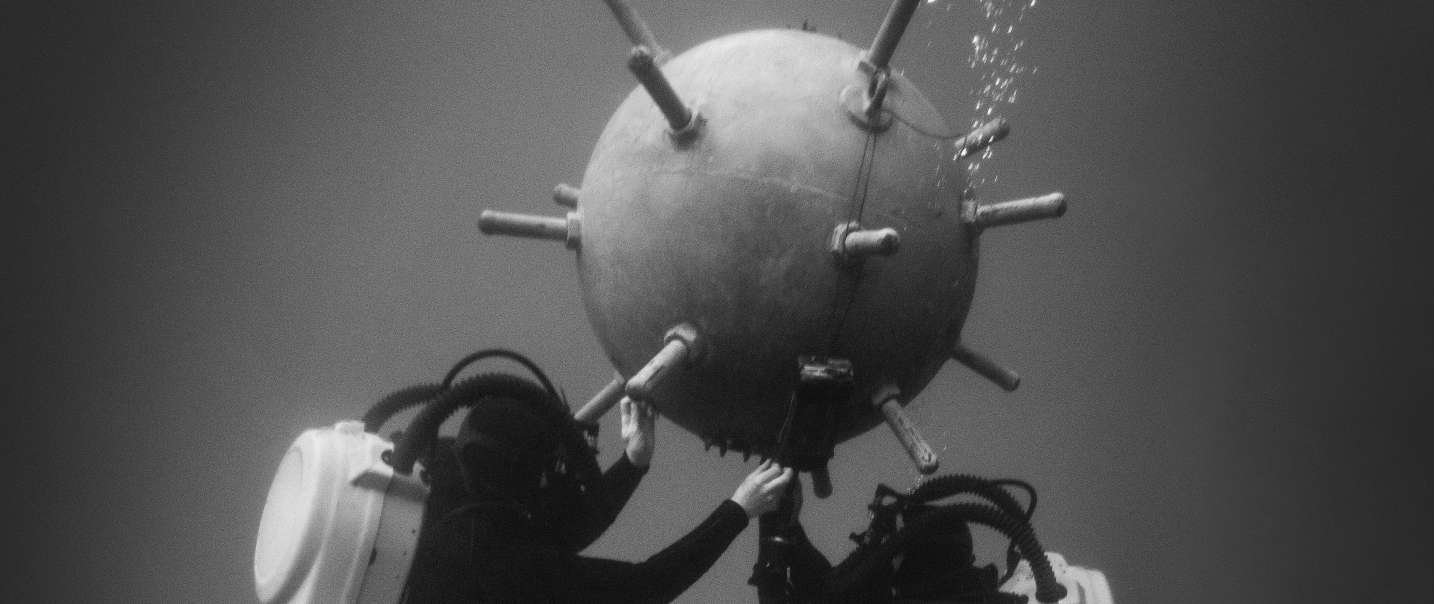
Then there are mines. CENTCOM said early in the crisis that there was no indication of mine-laying. As of today, none have been confirmed. Iran holds an estimated 5,000-6,000 naval mines per DIA assessments. US mine countermeasure capability is in transition: the Avenger-class MCM ships were withdrawn from Bahrain in 2025, with operationally unproven LCS replacements. Iran does not need a perfect minefield. It needs doubt. A single verified mine strike resets commercial confidence to zero and makes the insurance problem permanent until the waterway is certified clear, a process measured in weeks to months regardless of ceasefire. No P&I risk committee will reinstate coverage for a channel where mines may be present.
This is worth emphasizing: mines do not represent a separate risk that complicates the thesis. They represent the scenario where the thesis reaches its maximum expression. The insurance-duration argument says reopening takes longer than the market expects. Mines say reopening takes as long as clearance and certification require, which is a timeline that ceasefires cannot compress. Every day without mines makes rapid de-escalation more plausible. Any day mines appear makes the thesis permanent.
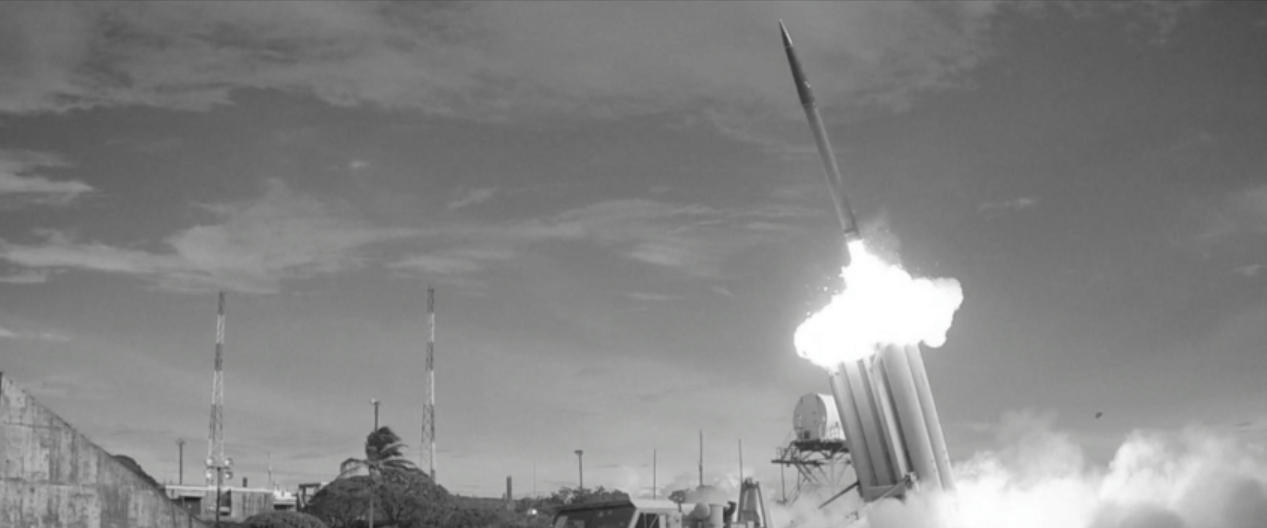
Two variables compound across all scenarios and deserve honest flagging because they introduce irreducible uncertainty. The nuclear overhang: Iran held roughly 440 kg of 60%-enriched uranium at Isfahan, the IAEA has lost contact, and a fourth enrichment facility of unknown location has been disclosed. If the conflict acquires a nuclear dimension, every duration estimate in this piece is wrong to the downside. The interceptor math: Shahed drones cost $20-50k, US interceptors cost $4-15 million. The June 2025 twelve-day war consumed 25% of the US THAAD stockpile at production rates of 11-12 per year. Iran produces roughly 100 offensive missiles per month. Hegseth acknowledged this week that the US "can't stop everything." This exchange ratio creates pressure simultaneously toward escalation (destroy launchers before stocks exhaust) and toward negotiation (attrition economics are unwinnable over months). I do not know which pressure wins. But the math is a reason to weight the tails more heavily than a simple prior would suggest.
Here are my scenario probabilities as of March 8, stated with the caveat that they carry wide confidence intervals and are analytical estimates rather than forecasts.
Rapid de-escalation, closure of one to two weeks: 15-20%. Requires Chinese-brokered ceasefire within days, no mines, and unusually fast P&I reinstatement. China has the leverage: it imports roughly 40% of its crude through the Strait, buys 80-90% of Iran's oil, and holds 1.2-1.5 billion barrels of strategic reserves that create a deadline on its patience. Iran has never sustained Hormuz closure in over four decades of threats. But the succession vacuum means there may be no one to negotiate with yet. And even after the 2019 Abqaiq attack, which was physically repaired in days, tanker premiums stayed elevated for weeks. I take this scenario seriously enough to size positions for survivability on a sharp reversal. I do not think it is the base case.
Managed disruption, closure of three to five weeks with partial recovery from late March: 50-55%. My modal case. Ceasefire signals by mid-March. Convoy escorts begin. One or two clubs reinstate buy-back at 1-2% of hull value. Flow recovers to 40-50% by late March, ~70% by late April. No mines. Brent peaks $100-120 in weeks three to four as Gulf onshore storage fills and producers are forced to shut in. JPMorgan's Kaneva estimates shut-ins approaching 6 mb/d. Bypass pipelines to the Red Sea carry 2.6 mb/d. SPR offsets 4-5 mb/d at maximum coordinated drawdown. That leaves 10-12 mb/d unmet, because the widely cited OPEC+ spare capacity of 5-6 mb/d is a mirage: 70-90% of it sits behind Hormuz. TTF peaks €70-90. Eurozone GDP drag of -0.5% to -1.0% annualized per the ECB's own Hormuz simulation.
Prolonged closure, six or more weeks: 25-30%. Triggered by confirmed mines, hardline successor doubling down, Houthis opening a dual chokepoint (they resumed Red Sea attacks on February 28), structural Qatar damage, or ground force deployment eliminating diplomatic off-ramps. Brent sustains $120-150, with $150-200 overshoot on mines. TTF at €90-150 with EU mandatory rationing. Global recession probability above 75%.
Probability-weighted, the expected duration of meaningful commercial disruption is roughly five to seven weeks. The Brent curve is pricing two to three.
That gap is interesting in crude but much more interesting further down the transmission chain, because the further from oil you move, the less efficiently the market has priced the disruption.
European gas is the second link. TTF at €50, up 56% in a week, is a large move but does not reflect the modal scenario's €70-90 range. Qatar declared force majeure after shutting Ras Laffan on March 2. Europe's 12-14% LNG dependence on Qatar is currently zero. EU gas storage at 46 bcm is a three-year low. The injection season starts in April. Goldman models €90-100 if Qatar stays offline beyond two months. The downstream damage, through electricity costs, industrial margins, and ECB policy, is only beginning to register. German manufacturing PMI was already at 43.7 before this started. Goldman models two ECB rate hikes in the severe scenario, which would reverse the entire easing cycle. The ECB's own 2023 simulation estimated a 0.7 percentage point drag on real GDP from a Hormuz closure. None of this is fully reflected in TTF at €50.
Fertilizer and food are the third link, and the widest gap I can identify between physical reality and market pricing. Roughly 33% of global fertilizer trade transits Hormuz, including up to 45% of urea. No country holds strategic fertilizer reserves. None. The Northern Hemisphere spring planting season is underway right now, and nitrogen application cannot be rescheduled. Qatar has shut the world's largest single-site urea plant. Three Indian urea facilities curtailed after losing LNG feedstock. Iranian producers halted. Chinese phosphate exports banned through August. Egyptian urea offline since mid-2025. Urea at New Orleans has jumped $70/short ton to $520-550. Egyptian granular urea rose 27%. Saudi raised FOB urea to $450 from $402. These are large upstream moves. Now look downstream: wheat is up 3.5%. Corn 4.7%. Agribusiness equities are flat. The transmission from fertilizer shortage to food inflation is well-documented and runs on a three-to-nine-month lag: higher costs and outright unavailability during the planting window reduce application rates, which reduce yields, which tighten grain balances, which raise prices. StoneX estimates 30 days from loading a Gulf urea vessel to reaching a US farmer. A vessel that cannot load this week is unavailable for spring application. Some farmers will switch from corn to soybeans if nitrogen does not arrive, tightening corn balances specifically. The market is looking at this season's crop conditions. It should be looking at next season's yields.
Semiconductors are the fourth link, and the least discussed. Qatar supplies roughly 30% of Taiwan's LNG imports.Taiwan's gas reserves cover approximately 10 to 11 days of normal consumption. TSMC, which fabricates about 90% of the world's most advanced chips, runs on that grid. These are the chips that power every AI training cluster, every data center expansion, every advanced weapons system. TSMC said this week it does not anticipate significant impact. That statement has a shelf life. If Qatar's outage persists and alternative LNG cargoes are competed away by European and Asian buyers bidding against depleted storage, Taiwan's 11-day buffer starts to look thin. South Korea flagged similar exposure: its chip industry depends on the Middle East for at least 14 supply chain inputs including helium and bromine. NVDA is already down 14% from highs. The Nasdaq fell 3.1% last week. The semiconductor complex was stretched on valuation before the crisis, and the LNG vulnerability gives institutional investors a fundamental reason to de-risk positions they were already looking for an excuse to trim. I am not arguing that TSMC faces imminent production cuts. I am arguing that the market has not connected Qatar LNG to Taiwan's grid to the world's most concentrated node of advanced chip fabrication. When it does, the repricing will not be orderly.
The deeper pattern is that Hormuz carries not just oil but what oil becomes. Roughly 92% of global sulfur is a byproduct of petroleum refining and gas processing. Sulfuric acid, derived from that sulfur, is the most produced industrial chemical in the world. It feeds phosphate fertilizer production and semiconductor-grade chemical processing alike. Three supply chains. One 21-mile chokepoint. Zero alternatives at scale.
What breaks this entire framework: a rapid ceasefire with rapid insurance normalization. If China brokers a deal through Oman, if the successor signals willingness to negotiate, if no mines appear, and if P&I clubs move with unprecedented speed, then crude retraces, TTF collapses, the fertilizer scare proves transient, and Taiwan's energy buffer is never tested. I weight this at 15-20%. It is not negligible. Iran has never sustained Hormuz closure in over forty years of threats, and the regime's own economic dependence on Strait transit creates real pressure for pragmatism. Any positioning must survive this scenario. But the remaining 80-85% of probability mass sits in worlds where the insurance lag, the succession vacuum, the interceptor attrition, and the physical supply chain produce a disruption substantially longer than the market expects.
In conclusion, I would say that the market is pricing an oil supply disruption but not an insurance market clearing problem, and the gap between those two timelines is where the next quarter's risk-adjusted returns are concentrated.
Seven signatures closed the Strait. Reopening requires more than seven, in sequence, and each one answers to a reinsurance treaty. Mines, if they come, do not change this logic. They make it permanent.
Quant Espresso is for informational and analytical purposes only. It does not constitute investment advice or a solicitation to buy or sell any security. All scenario probabilities and return estimates are the author's analytical judgment and subject to significant uncertainty. Positions and interests: the author holds long positions in TTF natural gas, corn futures, and agribusiness equities, which are discussed in this piece and may benefit from the dynamics described.